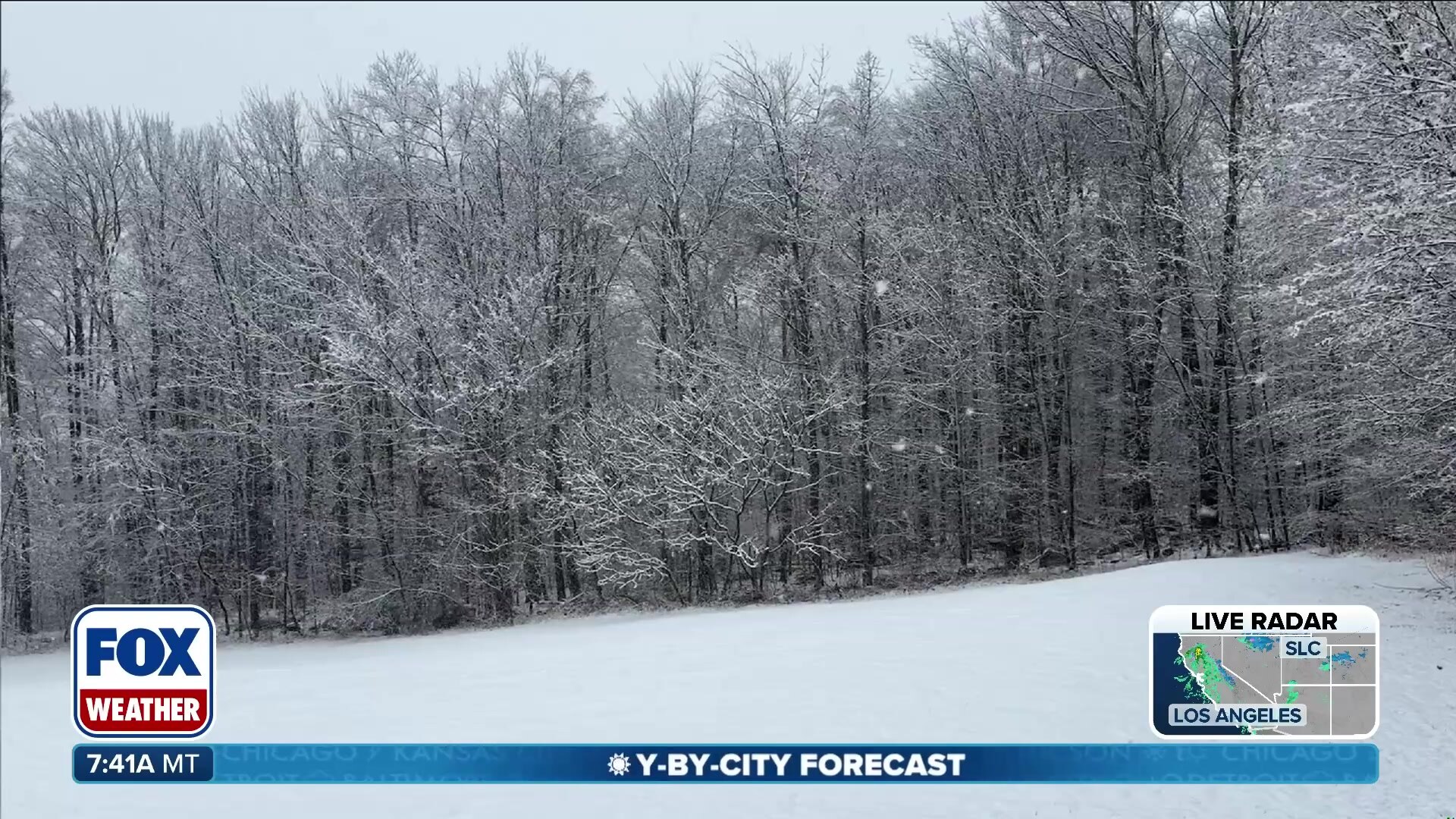
Understanding winter precipitation: Snow, sleet, and freezing rain formation
Weather Command · FWX · Feb 11, 2026 · 57sSign Up NowAlready a subscriber?
This segment provides an educational explanation of how different types of winter precipitation form. Snow requires atmospheric temperatures of 32°F or lower throughout. Sleet is produced when a melted snowflake refreezes before hitting the ground. Freezing rain occurs when liquid rain falls through a shallow layer of cold air near the surface, freezing upon contact with the ground. Small temperature changes in the atmosphere's profile can lead to significant differences in precipitation type.